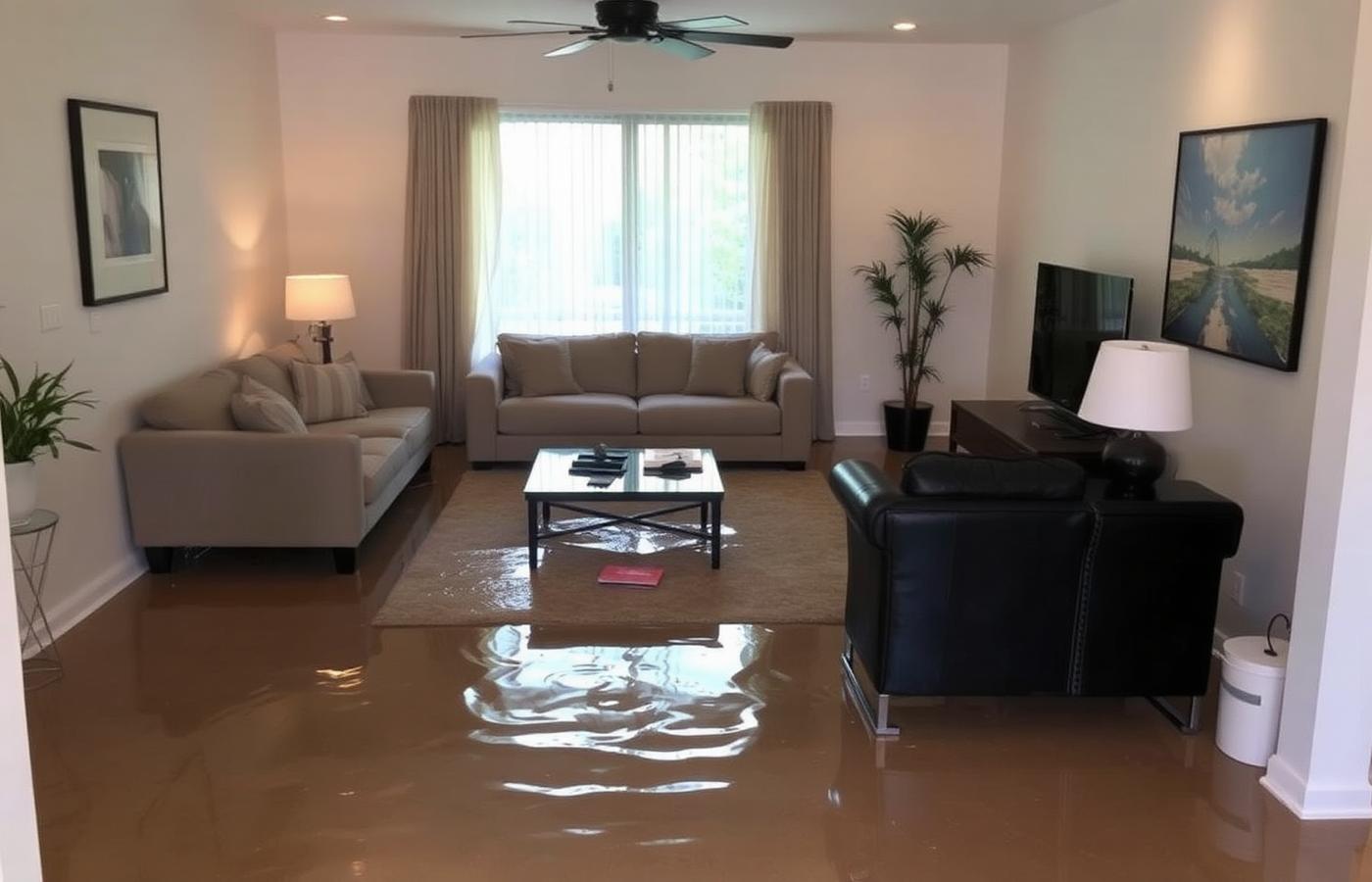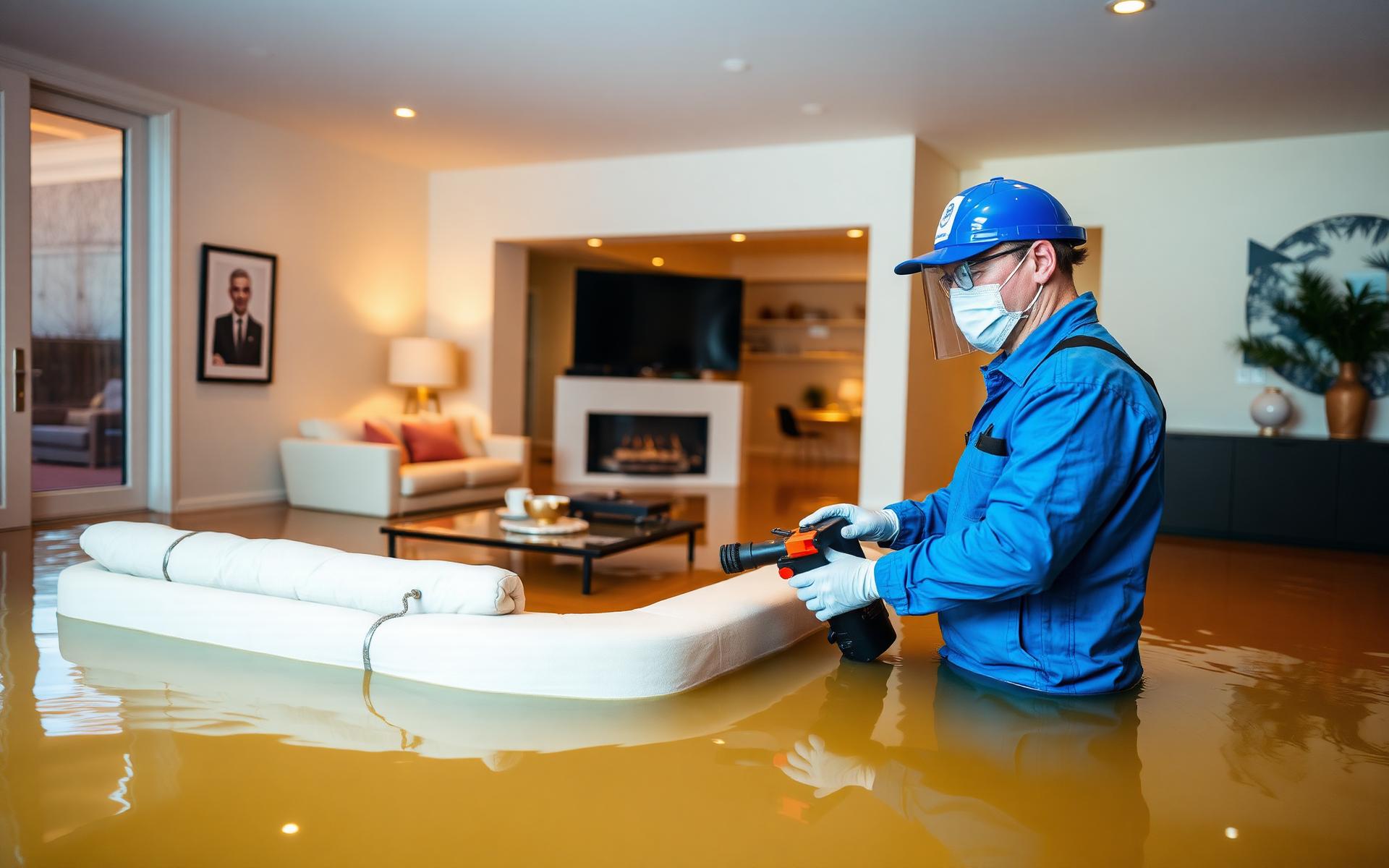
If you are standing in an inch of water right now, here is the short version: shut off the water source if you safely can, kill power to the affected rooms at the breaker, keep people and pets out of the water, and call a water removal company that can be on site today. Everything else in this guide can wait until the extraction truck is on its way.
We have pulled water out of homes all over Katy — two-story flooded stairwells in Cinco Ranch, slab leaks under kitchen islands in Grand Lakes, supply-line ruptures in brand-new Elyson and Cane Island builds, storm intrusion in Nottingham Country, and washing machine failures in Firethorne that ran all weekend while the family was out of town. The pattern is always the same. The homes that get extracted within a few hours lose carpet pad and some baseboard. The homes that sit overnight lose flooring, drywall, cabinets, and often end up in mold remediation.
This guide explains what professional water removal in Katy, TX actually involves, why speed matters so much in our climate, what equipment does the work, and how to tell whether you are dealing with something you can handle yourself or something that needs a crew.
Why Standing Water Is So Dangerous
Homeowners tend to look at standing water and see a mess. Restoration technicians look at it and see a clock. Water is not sitting still — it is actively moving into every porous material it touches, and it is doing that faster than most people imagine.
Within minutes, water wicks into carpet and pad, spreads under baseboards, and travels along the underside of flooring. Within an hour, drywall has drawn moisture up the wall by several inches through capillary action. Within a few hours, particleboard cabinet bases and vanity kicks begin to swell. Within a day, the humidity inside the closed house climbs high enough that rooms which never touched water start absorbing moisture from the air.
There is also a safety dimension. Standing water and electricity are a genuine hazard, especially in homes with floor outlets or in flooded garages where extension cords and power tools are common. Water that has traveled across a floor is rarely clean, and water that came from a toilet, a sewer line, or outside the building is contaminated from the first minute.
Finally, Katy's humidity works against you. In a Gulf Coast summer, ambient humidity often sits between 70 and 90 percent. A wet house with the doors closed and the air conditioning struggling becomes a mold incubator. This is the reason we push so hard on same-day extraction: in a dry climate you might get away with a slow response. Here, you generally do not.
How Quickly Water Damage Spreads
A rough but accurate timeline, based on what we see on real Katy jobs:
- 0–60 minutes: Water spreads across the floor, saturates carpet and pad, wicks under walls into adjacent rooms, and begins climbing drywall.
- 1–24 hours: Baseboards swell, laminate and engineered wood begin cupping, particleboard cabinet bases soften, drywall paper loses strength, and odor begins.
- 24–48 hours: Mold can begin colonizing wet organic materials such as drywall paper, carpet pad, insulation, and cabinet backs.
- 48–72 hours: Hardwood cups and crowns, subfloor delamination starts, mold spreads inside wall cavities, and the loss shifts from drying to demolition.
- 1 week+: Structural framing stays saturated, mold becomes visible, odors set into contents, and repair costs multiply.
The cost curve follows that same timeline. A living room extracted and dried within six hours often stays a mitigation-only job. That same room left wet for three days routinely turns into flooring replacement, drywall cut-outs, cabinet removal, and mold remediation — frequently several times the original cost.
What to Do Before the Water Removal Crew Arrives
You can meaningfully reduce your loss in the time it takes a crew to reach you. Do these things in order, and only if it is safe:
- Stop the source. Shut off the fixture valve, or the main shut-off at the street or by the garage wall. If it is a water heater, close the cold inlet valve on top of the tank.
- Cut power to affected areas at the breaker panel — do not stand in water to reach a panel or unplug anything submerged.
- Keep everyone out of the water, especially children and pets, and especially if it came from a toilet, drain, or outdoors.
- Photograph and video everything before you move anything. Wide shots of each room, then close-ups of damaged flooring, walls, and contents.
- Lift what you can. Put furniture legs on foil or blocks, pick up rugs, and move electronics, documents, and photos to a dry room.
- Open interior doors and closets so air can move, and run the air conditioning if the system is undamaged and power is safe.
- Do not run a household vacuum on water, and do not use a box fan on contaminated water — it aerosolizes bacteria.
- Call your restoration company first, then your insurance carrier. Mitigation is expected to start immediately; carriers do not require you to wait for an adjuster.
What Is Water Removal? Removal, Extraction, Mitigation, Drying, and Restoration
These five terms get used interchangeably in marketing, which confuses homeowners and makes it hard to compare estimates. They are actually five distinct stages, and knowing where each one fits tells you whether a company is quoting you the same scope as its competitor.
Water removal
Water removal is the broad term for getting bulk water out of the building — pumping, vacuuming, and hauling out standing water. When a homeowner searches for water removal in Katy TX, this is almost always the immediate need: there is visible water on the floor and it has to go.
Water extraction
Water extraction is the technical, mechanical process of pulling water out of materials, not just off the surface. Truck-mounted and portable extractors pull water from carpet, pad, and the surface layer of subfloor. Extraction is measurably more effective than evaporation: every gallon extracted mechanically is a gallon your dehumidifiers do not have to remove from the air, which shortens drying by days.
Water mitigation
Mitigation is everything done to stop the damage from getting worse: extraction, controlled demolition such as removing wet carpet pad or making drywall flood cuts, antimicrobial application, and setting drying equipment. On an insurance claim, mitigation is usually billed separately from repairs.
Structural drying
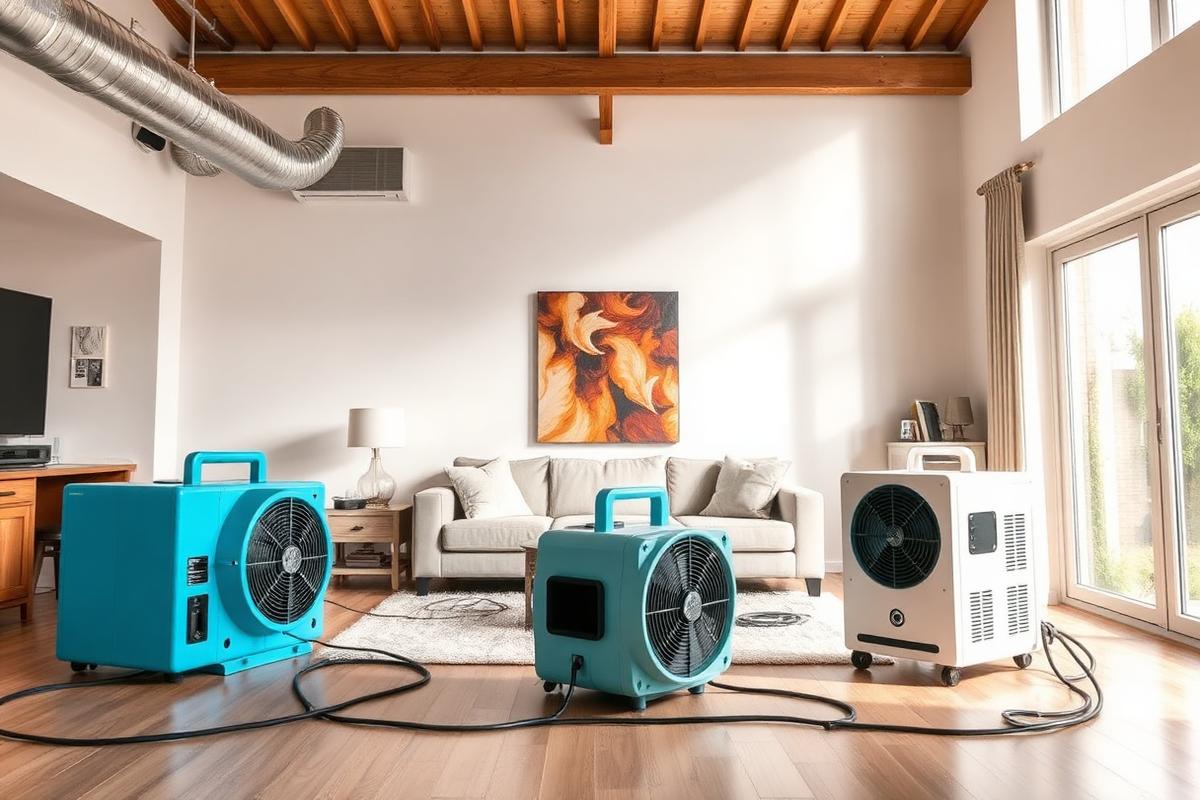
Drying is the engineered phase. Air movers accelerate evaporation from wet materials while dehumidifiers pull that evaporated moisture out of the air and out of the building. This is measured work — technicians take daily readings and adjust equipment until materials match the dry standard from an unaffected part of the house.
Restoration
Restoration is putting the house back: new flooring, drywall, texture, paint, trim, and cabinetry. Restoration should never begin until documented moisture readings prove the structure is dry. Building over wet framing is the single most common cause of mold complaints months after a loss.
Why Immediate Water Extraction Matters
Structural damage
Wood framing, subfloor, and sheathing are strong when dry and progressively weaker as moisture content rises. OSB subfloor in particular swells and delaminates when it stays saturated, and once the layers separate, the panel does not recover — it gets replaced. Prompt extraction keeps moisture content low enough for materials to dry rather than fail.
Hardwood floors
Solid and engineered wood floors are the most time-sensitive material in most Katy homes. Boards absorb water from the edges and underside, expand, and cup within 24 to 48 hours. Extract quickly and set specialty drying mats and there is a real chance of saving the floor. Wait a few days and cupping becomes permanent, adhesive bonds fail, and replacement is the only option.
Carpet and pad
Carpet itself is often salvageable after a clean-water loss if it is extracted quickly and dried in place. The pad almost never is — it is a sponge that holds many times its weight in water and dries far too slowly. Wet carpet extraction plus pad removal is standard practice for a reason.
Mold growth
Mold needs moisture, an organic food source, and time. A wet house supplies the first two instantly. Extraction removes the moisture before the clock runs out. This is the entire logic behind emergency water removal: you are buying your way out of a mold remediation project.
Electrical hazards
Water that reaches outlets, floor boxes, or a panel creates shock and fire risk. It also gets into HVAC systems and ductwork in slab homes, where standing water in ducts becomes a long-term air quality problem. Removing the water fast limits how far it travels into systems.
Foundation and slab concerns
Katy sits on expansive clay soil that swells when wet and shrinks when dry. Water pooling against a foundation — from a broken exterior line, a failed irrigation head, or storm runoff — creates uneven soil moisture, which is a genuine contributor to foundation movement. Removing exterior standing water and correcting drainage is part of a complete response, not an afterthought.
Restoration cost
Every one of the above translates directly into money. A same-day extraction with three days of drying is a mitigation invoice. A week-old loss is a reconstruction project with a mold protocol attached. In our experience the difference is routinely five to ten thousand dollars on an average-size Katy home.
Our Water Removal Process, Step by Step
1. Emergency call and triage
The call is where mitigation actually starts. We walk you through shutting off the source, powering down affected circuits, and staying out of contaminated water while a crew is dispatched. We ask what the water source is, how long it has been running, how many rooms are affected, and what flooring is involved — that determines which truck and equipment package we send.
2. On-site inspection and safety check
The technician confirms the source is stopped, checks for electrical hazards and slip risks, identifies the water category, and looks for anything that changes scope: asbestos-era materials in older Old Katy and Nottingham Country homes, saturated ceilings at risk of collapse, or contaminated water requiring containment and PPE.
3. Moisture mapping
This is the step that separates a professional job from a rental-equipment job. Using penetrating and non-penetrating moisture meters plus thermal imaging, the technician maps exactly how far water migrated — including under cabinets, behind baseboards, into wall cavities, and into adjacent rooms that look dry. That map defines the drying plan and becomes the baseline for daily readings.
4. Standing water extraction
Bulk water comes out first, always. Depending on depth and volume we use submersible pumps for anything more than a couple of inches, then switch to extraction units as the level drops. Removing bulk water first is what makes everything downstream faster.
5. Truck-mounted extraction
Truck-mounted units are the workhorses of professional water removal. They generate far stronger vacuum lift than any portable machine, they never need emptying because water discharges to an onboard tank, and heated units help release water bound in carpet fibers. On large losses this is the difference between hours and days.
6. Portable extractors
Portables go where hoses cannot reach efficiently — second floors, long-run interior rooms, offices in commercial buildings, and tight spaces. Weighted extraction tools mounted to portables press the technician's body weight into the carpet to pull far more water out of the pad than a wand alone.
7. Submersible pumps and wet vacuum systems
Submersible pumps handle deep water in garages, crawl spaces, elevator pits, and flooded commercial areas. Wet vacuum systems handle the remainder, hard surfaces, and detail work along walls and thresholds where water pools.
8. Carpet extraction and pad removal
For clean-water losses, we typically float the carpet, remove and dispose of the pad, extract the subfloor, and dry the carpet in place. For gray or black water, carpet and pad both come out. Making that call correctly on day one prevents a callback three weeks later for odor.
9. Controlled demolition when needed
Sometimes drying in place is not possible. Wet insulation never dries adequately inside a wall, so we make flood cuts, remove insulation, and dry the cavity. Cabinet toe kicks get drilled or vented so air reaches underneath. The goal is always the minimum removal that still allows complete drying.
10. Antimicrobial application
After extraction, affected surfaces are treated with an EPA-registered antimicrobial to suppress bacterial and fungal growth during the drying window. This is preventive, not a substitute for remediation if mold is already established.
11. Air movers and dehumidification
Air movers are placed at calculated intervals and angles to sweep the boundary layer off wet surfaces and accelerate evaporation. Commercial dehumidifiers — usually low-grain refrigerant units, sometimes desiccant for hardwood and dense materials — pull that moisture out of the air. Both are sized to the volume of the affected space, not guessed at.
12. Daily moisture monitoring
A technician returns daily to record temperature, relative humidity, grains per pound, and material moisture content at the same mapped points. Equipment gets repositioned or added when readings stall. This log is also what your adjuster will want to see.
13. Final inspection and dry standard
Drying is complete when affected materials read at or below the moisture content of comparable unaffected materials in the same home, not when the floor looks dry. Equipment comes out, and a final walkthrough documents the completed scope.
14. Insurance documentation
You receive photos, the moisture map, daily drying logs, equipment inventory, and a line-item scope written in the estimating software carriers use. Complete documentation is the most reliable way to get a claim paid without argument.
Equipment Used for Professional Water Extraction
Commercial pumps
Submersible and trash pumps move high volumes of water quickly, including water carrying debris. They handle depths and volumes a shop vac would take days to touch.
Extraction machines
Truck-mounts and high-lift portables produce the vacuum needed to pull water out of carpet, pad, and the top layer of subfloor. Weighted extraction tools multiply that effect.
Moisture meters
Penetrating meters read moisture content inside wood and drywall; non-penetrating meters scan large areas without damage. Together they show what is actually wet versus what merely looks wet.
Thermal imaging cameras
Infrared cameras reveal temperature differences caused by evaporative cooling, which quickly locates hidden water behind walls and under floors. They do not detect moisture directly — findings are always confirmed with a meter.
Industrial dehumidifiers
Low-grain refrigerant units remove many times more moisture per day than a household dehumidifier and keep working at low humidity levels where consumer units stall. Desiccant units go further for dense materials and hardwood.
Air movers
Centrifugal and axial air movers are engineered to direct high-velocity air across surfaces at specific angles. A box fan pushes air around a room; an air mover strips the saturated boundary layer off a wet surface so evaporation can continue.
HEPA filtration
Air scrubbers with HEPA filters capture airborne particulate and spores during drying and demolition, which matters on contaminated losses and any job where mold is suspected.
Drying mats and injection systems
Floor drying mats pull water up through hardwood and tile assemblies using vacuum, and injection systems push dry air into wall cavities through small holes. Both allow drying without tearing out finishes.
Hygrometers and data loggers
Thermo-hygrometers measure temperature and relative humidity so technicians can calculate grains per pound and verify the drying chamber is actually removing moisture rather than recirculating it.
Why professional equipment outperforms rentals
The difference is not brand — it is capacity and measurement. Rental fans and consumer dehumidifiers can dry a small damp spot. They cannot create and maintain a controlled drying chamber across a wet house, and they provide no data. Without moisture readings you are guessing, and the usual result of guessing is a surface that feels dry over a wall cavity that is not.
Common Causes of Water Removal Calls in Katy
Burst pipes
Freeze events are rare here but devastating when they happen, because most Katy plumbing runs through unconditioned attic space. A single burst attic line can release hundreds of gallons through ceilings before anyone notices.
Washing machine failures
Braided supply hoses fail around the eight-year mark, and a failed hose runs at full pressure until someone shuts the valve. Second-floor laundry rooms — standard in most newer Cinco Ranch, Firethorne, and Cane Island floor plans — turn this into a multi-level loss.
Dishwasher leaks
Dishwasher leaks are slow and hidden. Water runs under the cabinet run and into the subfloor, and the first symptom is usually a soft spot in front of the sink or swollen cabinet kicks.
Refrigerator line leaks
Quarter-inch ice maker lines develop pinhole leaks behind the refrigerator where nobody looks. These commonly run for weeks and are among the most frequent causes of hidden hardwood damage in Katy kitchens.
Slab leaks
Clay soil movement stresses supply lines under the slab. Warm spots on the floor, unexplained water bill increases, and the sound of running water with all fixtures off are the classic signs. Repair requires a plumber; the resulting saturation requires extraction and drying.
Overflowing toilets
An overflow from the bowl side is category 3 water from the start, which changes the entire scope — porous materials come out rather than getting dried.
Flooding and storm intrusion
Gulf Coast storms produce rainfall rates that overwhelm drainage. Water entering from outside is contaminated groundwater and is handled as category 3 regardless of how clear it looks.
Water heater failures
Tanks rust from the inside and fail without warning, usually past year ten. Attic-installed heaters with failed or clogged drain pans send water straight through the ceiling below.
HVAC condensate leaks
In Katy's cooling season, an air handler produces gallons of condensate per day. A clogged drain line or rusted-out secondary pan puts that water into the ceiling, and the resulting stain often shows up long after the wetting started.
Roof leaks
Wind-lifted shingles, failed flashing, and hail damage let rain into the attic, where it soaks insulation before saturating ceiling drywall.
Sewer backups
Main line blockages and municipal surcharge during heavy rain push contaminated water up through the lowest drains in the house. These require containment, PPE, aggressive removal of porous materials, and disinfection.
Water Categories: Clean, Gray, and Black Water
Category 1 — clean water
Water from a sanitary source: supply lines, water heaters, ice maker lines, and rain that has not contacted contaminants. Most materials can be dried in place if the response is fast. Important caveat: category 1 water degrades to category 2 within roughly 24 to 48 hours as it picks up soil and bacteria and sits at warm temperatures.
Category 2 — gray water
Water with significant contamination that can cause illness: dishwasher and washing machine discharge, toilet overflow containing urine but no solids, and aquarium or waterbed water. Carpet pad is discarded, and cleaning plus antimicrobial treatment is required.
Category 3 — black water
Grossly contaminated water: sewage, sewer backups, rising floodwater, and any water that sat long enough to grow significant microbial populations. Porous materials — carpet, pad, insulation, affected drywall, particleboard — are removed and disposed of. Work is done under containment with HEPA filtration and full PPE.
Why category changes everything
Category determines what gets saved, what gets removed, what protective equipment is required, and what the job costs. It is also why a reputable company inspects before quoting. Anyone offering a firm price for water removal over the phone without knowing the source has not asked the question that matters most.
Can You Remove Water Yourself?
Where a shop vac reaches its limit
A shop vac pulls surface water off hard flooring. It does not develop the lift needed to pull water out of carpet pad or subfloor, and a five-gallon tank on a real loss means dozens of trips to the driveway while water keeps wicking into walls.
Household fans and dehumidifiers
Box fans move room air; they do not create the directed airflow that drives evaporation from wet materials. And moving humid air around a closed house without adequate dehumidification simply relocates moisture into dry materials elsewhere. A residential dehumidifier removes a fraction of what a commercial unit does.
When DIY genuinely works
Small, clean-water spills caught immediately on a hard surface — an overflowed sink, a knocked-over aquarium, a slow supply drip found the same day — are reasonable to handle yourself. Dry it thoroughly within a few hours, pull the baseboard if any wall got wet, and check the area again for a week for odor or discoloration.
When you need professionals
Call a water extraction company when water covered more than a small area, soaked carpet or reached walls, came from a toilet or sewer or outdoors, sat for more than a few hours, or involves an unknown source. Same goes for anything affecting hardwood, cabinets, or multiple rooms.
Hidden moisture is the real risk
The consistent failure mode of DIY water removal is not the visible water — it is the water inside the wall cavity, under the cabinet run, and beneath the flooring. Without meters you cannot verify dryness, and the consequence shows up six weeks later as a musty smell and a mold estimate.
Insurance implications
Policies require you to mitigate promptly and reasonably. If a DIY attempt fails and damage worsens, a carrier may reduce or deny the portion attributable to delay. Professional documentation also gives you objective evidence of what was wet and what it took to dry it.
How Fast Does Mold Begin After Water Damage?
Under favorable conditions — which Katy supplies most of the year — mold can begin colonizing wet organic materials in 24 to 48 hours, and becomes visible within a few days to a week. The variables are moisture, temperature, and food source, and a wet house maxes out all three.
- Humidity: sustained indoor relative humidity above roughly 60 percent supports growth even in materials that were never directly wetted.
- Drywall: paper facing is an ideal food source and stays wet long after the surface feels dry.
- Insulation: fiberglass batts hold water against framing and effectively never dry inside a closed wall — this is why we cut and remove rather than try to dry them.
- Subfloors: OSB and plywood retain moisture under flooring where there is no airflow at all.
- Cabinets: particleboard boxes and toe kicks wick water and hide it behind finished surfaces.
- Carpet padding: the single most reliable place to find mold after an incomplete DIY cleanup.
The practical takeaway: the 24 to 48 hour window is not marketing. It is why emergency water removal is scheduled at 2 a.m. rather than Monday morning.
How Water Affects Different Materials
Drywall
Drywall wicks water upward from the floor, typically 8 to 16 inches within hours. Gypsum can often be dried if the wetting was brief and clean, but paper facing that has softened or stained gets replaced. Wet insulation behind it is the deciding factor for flood cuts.
Hardwood flooring
Solid wood cups as the underside absorbs more moisture than the top. Fast extraction plus mat drying saves many floors; days of saturation does not. Never sand a cupped floor until moisture content has stabilized, or it will crown later.
Laminate
Laminate is the least forgiving common floor. Its high-density fiberboard core swells irreversibly and edges chip within hours. Laminate is nearly always a replacement after meaningful water exposure.
Luxury vinyl plank
LVP is waterproof, but the assembly is not. Water travels through seams and sits between the plank and the subfloor, where it cannot evaporate. Planks usually must be lifted to dry the subfloor, then reinstalled or replaced depending on the locking system.
Tile
Tile survives water; the mortar bed, subfloor, and cabinet substrate beneath it may not. On wood-framed floors, we drill and use mat systems or inject dry air rather than assume the assembly beneath is fine.
Carpet
Carpet from a category 1 loss is generally salvageable with prompt extraction, pad removal, and in-place drying. Category 2 and 3 carpet is removed. Delamination — backing separating from face fiber — means replacement regardless of category.
Concrete
Concrete absorbs and holds significant moisture and releases it slowly. On slab homes this matters enormously: putting new flooring over a slab that has not returned to acceptable moisture levels causes adhesive failure and trapped moisture problems later.
Cabinets
Plywood boxes with solid faces often survive; particleboard boxes swell and lose structural integrity. Toe kicks and the sill behind them are frequently overlooked, and they hold water directly against the subfloor.
Baseboards and trim
MDF baseboard swells and delaminates quickly and is usually replaced. Removing baseboard early is standard practice anyway — it opens the wall cavity for airflow and lets you verify what is happening behind it.
Furniture and contents
Upholstered furniture on wet carpet wicks water and stains the floor beneath. Get legs up on blocks immediately. Solid wood furniture usually recovers if dried; particleboard furniture generally does not.
Electronics and documents
Do not power on anything that got wet. Electronics, photographs, and documents should be moved to a dry, conditioned space right away; specialty document drying is available for high-value items but it is time-sensitive.
Insurance and Water Removal Claims
What Texas homeowners policies usually cover
Most standard policies cover water damage that is sudden and accidental. That typically includes burst supply lines, water heater ruptures, appliance failures, and storm-driven rain that enters through wind-created openings. Mitigation — extraction, drying, and the equipment — is generally covered when the cause of loss is covered.
What is usually excluded
Rising floodwater is excluded from standard homeowners policies and requires separate flood insurance, which matters a great deal in parts of Katy. Long-term seepage, gradual leaks, and damage attributed to deferred maintenance are also commonly denied, as are some slab leak repairs — though resulting damage may still be covered.
Documentation that gets claims paid
Photograph and video everything before mitigation begins, keep the failed part if a component broke, save receipts for anything you buy, and keep the restoration company's moisture logs. A daily drying log with readings is the most persuasive document in the file because it justifies each day of equipment.
Moisture reports and scope
A proper report includes initial moisture map, affected material inventory, equipment count and placement, and daily readings through the dry standard. Adjusters approve scopes they can verify.
Working with the adjuster
Report the claim promptly, but start mitigation immediately — you are contractually required to prevent further damage and are not required to wait. Let your restoration contractor speak directly with the adjuster about scope; that conversation is technical and goes better between people who both use the same estimating platform.
Signs Hidden Water Is Still in Your Home
- Musty or earthy odor that is strongest near a wall, closet, or cabinet — smell is often the earliest indicator of microbial growth.
- Warping or cupping in wood or laminate flooring, sometimes appearing days after the original event.
- Buckling or lifting at flooring seams and transitions.
- Peeling, bubbling, or blistering paint, and tape joints in drywall that begin to separate.
- Soft or spongy drywall that gives under light thumb pressure, especially along the bottom of a wall.
- Indoor relative humidity that stays above 60 percent even with the air conditioning running normally.
- Cold spots on a wall or floor caused by ongoing evaporative cooling from trapped moisture.
- Persistent dampness — carpet that never fully dries, baseboards that stay dark, or a stain that keeps reappearing.
- Unexplained allergy or respiratory symptoms that improve when occupants leave the house.
Any of these after a water event justifies a moisture inspection. Meters and thermal imaging answer the question in under an hour, and finding trapped moisture at week one is a dramatically smaller problem than finding it at month three.
How Long Does Water Extraction Take?
Small leaks and single rooms
Extraction on a single wet room typically takes one to three hours. Drying equipment usually stays two to three days, with a technician checking readings daily.
Flooded rooms and multiple areas
Several affected rooms, or a second-floor loss that traveled downstairs, generally means three to six hours of extraction on day one and three to five days of drying, longer if hardwood or cabinetry is involved.
Whole-home losses
A whole-house event — an attic pipe that ran overnight, or storm flooding across the ground floor — can take a full day or more of extraction with multiple technicians, followed by five to ten days of drying and often controlled demolition.
Commercial buildings
Commercial extraction is scoped by square footage and business continuity. We commonly work overnight and in phases so operations continue, with large-loss equipment packages and desiccant dehumidification for open floor plates. Timelines range from a couple of days to several weeks depending on size and construction.
In every case, extraction is fast and drying is what takes time. Anyone promising a dry house in 24 hours is either working on a very small loss or not measuring.
Why Choose a Professional Water Extraction Company in Katy
- Faster drying: mechanical extraction removes far more water than evaporation, which shortens equipment time and reduces secondary damage.
- Less demolition: aggressive early extraction plus in-place drying frequently saves flooring, cabinetry, and drywall that would otherwise be torn out.
- Lower mold risk: hitting the dry standard within the 24 to 48 hour window is the most reliable mold prevention there is.
- Insurance support: photos, moisture maps, daily logs, and line-item scopes written the way carriers expect them.
- Professional equipment: truck-mounted extractors, LGR and desiccant dehumidifiers, thermal imaging, and HEPA filtration.
- Trained technicians: category assessment, drying calculations, and containment done to industry standard rather than by feel.
- 24/7 local response: crews based in the Katy area, reaching Cinco Ranch, Grand Lakes, Firethorne, Elyson, Cane Island, Nottingham Country, Cypress, Richmond, Fulshear, Sugar Land, and West Houston.
Water Removal Throughout Katy and Surrounding Communities
Different parts of Katy fail in different ways, and knowing the housing stock speeds up the diagnosis. Newer master-planned communities such as Elyson, Cane Island, and the western sections of Firethorne have young plumbing but plenty of second-floor laundry rooms and attic-mounted water heaters — when those fail, water travels through two levels. Cinco Ranch and Grand Lakes homes are now old enough that original supply lines, water heaters, and shower pans are reaching end of life. Nottingham Country and Old Katy homes bring the added variables of cast iron drain lines, original slab plumbing, and materials that require care during demolition.
We provide emergency water removal across all of these areas, plus Cypress, Richmond, Fulshear, Sugar Land, and West Houston. Same-day response is the standard, and after-hours calls are answered by people who dispatch crews, not a call center.
Act Now: Every Hour of Standing Water Costs You Money
Water damage is one of the few home emergencies where your decision in the first hour determines the size of the bill. Extract quickly and you are looking at a few days of equipment, some baseboard, and carpet pad. Wait a weekend and you are looking at flooring replacement, drywall, cabinets, and a mold protocol — with weeks of disruption attached.
If there is standing water in your home right now, stop the source, stay out of the water, cut power to the affected area, and call for professional water extraction. Katy Water Damage Pros responds 24/7 throughout Katy and the surrounding communities with truck-mounted extraction, commercial drying equipment, documented moisture monitoring, and full insurance documentation.
Call now, or reach us through our contact page, and we will tell you exactly what to do while a crew is on the way.