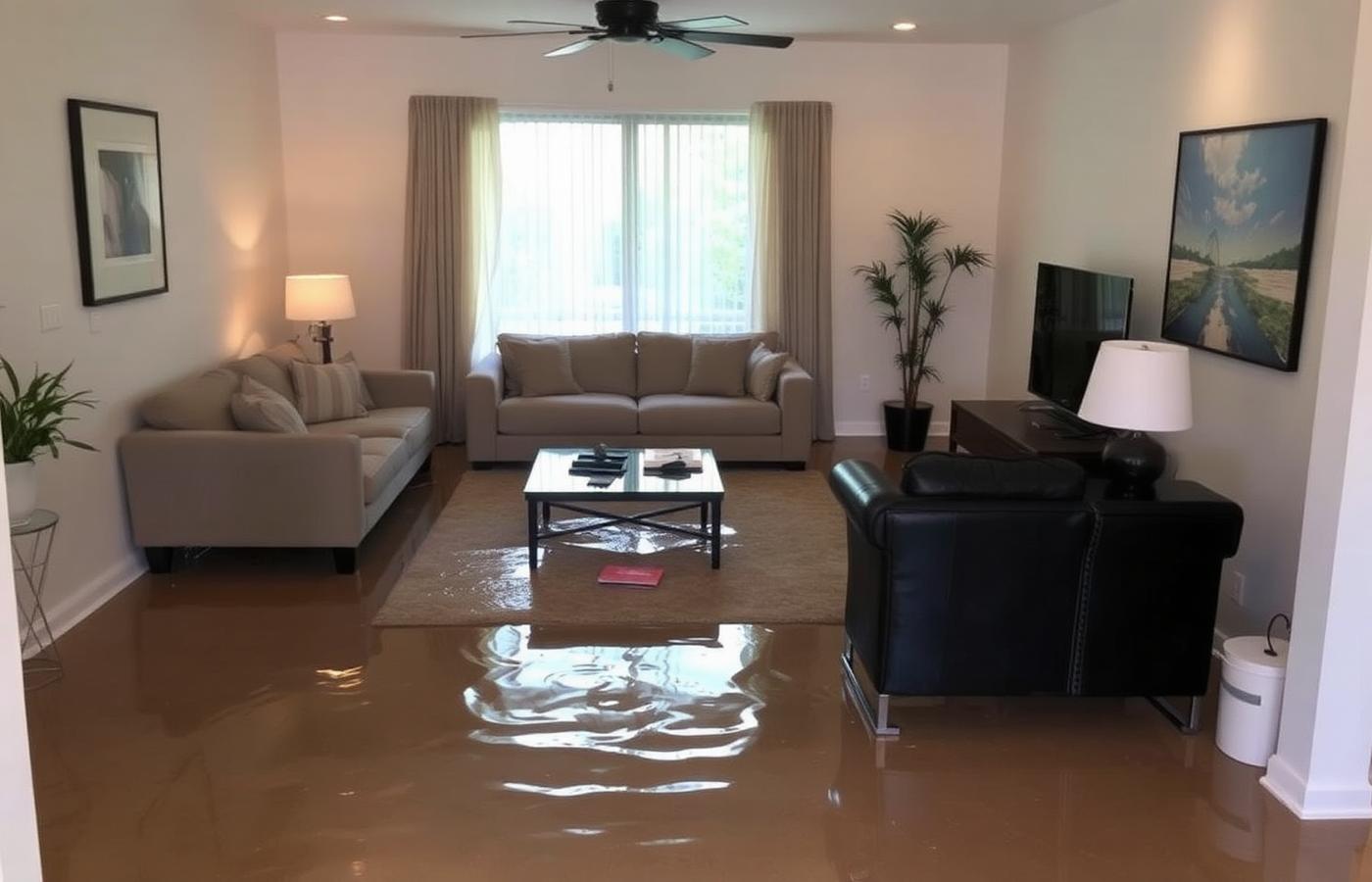
You walked into the laundry room and the floor was wet. Or you noticed the baseboard in the hallway had gone dark and soft. Maybe a supply line let go under the kitchen sink while you were at work, and now there's water two rooms away from where it started.
The first question almost every homeowner asks us is not "how much does this cost." It's simpler than that: do I really need water damage restoration, or can I just run some fans and let it dry?
That's a fair question, and the honest answer is: sometimes you can handle it yourself. We tell people that on the phone regularly. But there's a specific line between a spill you can dry and damage that needs equipment and moisture readings — and once you know where that line is, the decision usually gets easy.
This guide walks through how a restoration technician actually makes that call, what photos can and can't tell you, and what professional water damage restoration in Katy, TX involves if you do end up needing it.
How Do You Know If You Really Need Water Damage Restoration?
Here's the shortcut we use. If any one of the following is true, the job is past the DIY line and you should get a professional moisture assessment.
1. Water soaked into drywall, flooring, insulation, or cabinets
Water on a tile floor is a mop job. Water that has been absorbed into a porous building material is a drying job, and those are very different problems.
Drywall wicks moisture upward through capillary action — often six to twelve inches above the visible water line within the first hour. Carpet pad holds several times its own weight in water. Particleboard cabinet bases and vanity kicks swell and delaminate. Fiberglass insulation inside a wall cavity stays saturated for weeks because nothing is moving air through it.
Surface water evaporates on its own. Absorbed water does not, at least not fast enough to matter.
2. The water has been standing more than 24 hours
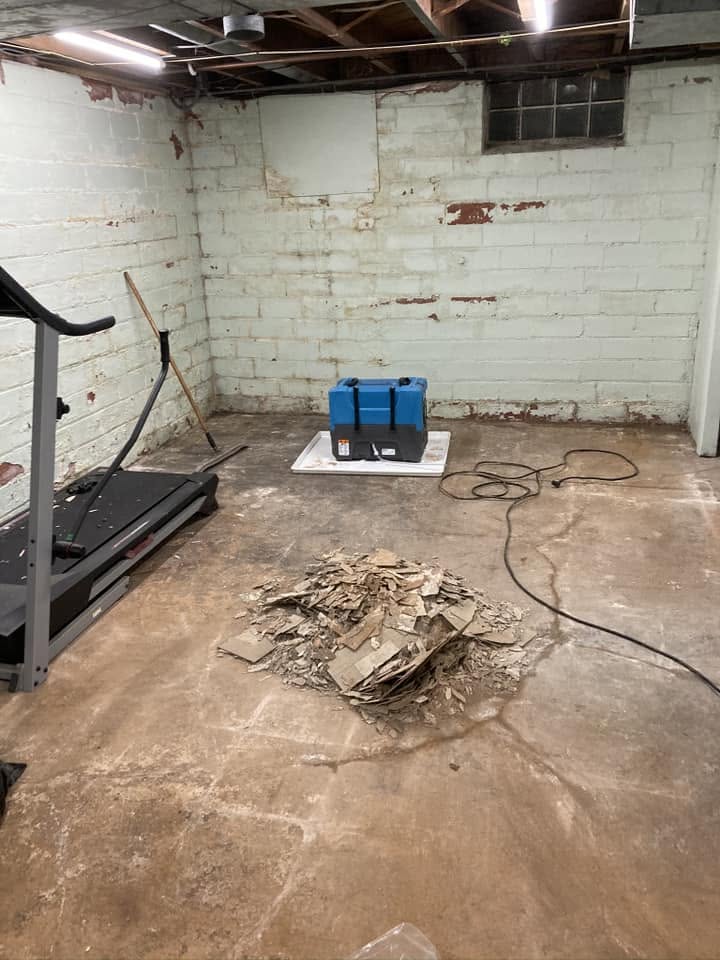
Time is the single biggest variable in whether a loss stays small. A clean-water leak caught in the first few hours is usually a Category 1 job: extract, dry, replace some baseboard, done. The same leak found 48 hours later has often degraded into Category 2 — bacteria have multiplied, materials have swelled, and the scope grows.
If you don't know how long the water sat — say, you were out of town, or the leak was behind a wall — assume it's been long enough to matter.
3. There's a musty smell
A musty or earthy odor is microbial growth releasing compounds into the air. It means moisture has been present long enough for something to start growing, usually in a place you can't see. You cannot deodorize your way out of that; the moisture source has to be found and dried.
4. You don't know where the water came from
An unknown source is a real problem, because you can't dry a house that's still getting wet. Slab leaks, roof leaks that travel along rafters, and pinhole leaks in supply lines inside walls all show up far from where they started. If you can't point to the source and confirm it's stopped, you need someone with a moisture meter and a thermal camera.
5. Sewage or contaminated water is involved
This one isn't a judgment call. Toilet overflow past the trap, sewer backup, or floodwater from outside the building is Category 3 water. It carries pathogens, and the affected porous materials generally have to be removed rather than dried. Don't run fans on it — that aerosolizes contaminants through the rest of the house.
6. Mold growth is possible
In Katy's climate, possible means likely. With ambient humidity in the 70–90% range for much of the year, a wet wall cavity in a closed-up house is close to ideal conditions for growth. Mold typically becomes visible somewhere between 24 and 72 hours after materials stay wet — and it's active well before you can see it.
When DIY Water Cleanup May Be Enough
We're not going to pretend every wet floor needs a truck in the driveway. Plenty of small losses are genuinely a homeowner job.
DIY is usually reasonable when all of these are true:
- The water is clean — supply line, water heater inlet, refrigerator line, an overflowing bathtub of clean water
- You caught it immediately, within an hour or two
- The area is small, roughly under 10 square feet
- It stayed on a hard, non-porous surface like tile, sealed concrete, or a sealed countertop
- No water reached drywall, carpet pad, laminate seams, or cabinet bases
- You can see and reach every wet surface
In that case: stop the source, towel up standing water, wipe down the surfaces, pull the wet items off the floor, run a fan and your air conditioning, and check back in 24 hours. If the area is dry to the touch and there's no smell or discoloration, you're fine.
Where DIY quietly goes wrong is hidden moisture. Water finds gaps. It goes under laminate planks through the seams, under the toe kick of a cabinet run, through the gap where the flooring meets the wall, and into the wall cavity. The visible surface dries in a day and looks fine, while the material behind it stays wet for weeks. That's how a small kitchen leak turns into a cabinet replacement six months later.
A practical test: pull a section of baseboard in the wettest spot. If the back of the baseboard and the bottom of the drywall behind it are dry, you likely caught it. If either is damp, water got into the wall and household fans won't reach it.
Why Water Damage Can Be Worse Than It Looks
Almost every job we go out to is bigger than the homeowner expected — not because anyone missed something obvious, but because most of the damage happens where you can't see it.
Moisture behind walls
Painted drywall is fairly good at hiding moisture. The paint film slows evaporation from the face of the wall, so the surface can feel dry while the gypsum core and the insulation behind it are saturated. On thermal imaging, that shows up as a clean cold band running along the base of the wall, often extending well past the room where the leak happened.
Damaged subfloors
Under your finished floor is either plywood, OSB, or slab. OSB is the one that causes trouble — it swells irreversibly when wet and doesn't recover its thickness when it dries, which is what causes soft spots and squeaks later. On slab foundations, which most Katy homes have, water gets trapped between the flooring and the concrete with almost nowhere to go until the flooring comes up.
The mold growth timeline
Spores are already in every house. They need moisture and a food source, and drywall paper plus wood framing is an excellent food source. In our humidity, growth commonly starts within 24–48 hours and is established by 72. The entire strategy of professional drying is to get materials below the moisture threshold before that window closes.
Structural risk
This is the rarest outcome, and we don't want to overstate it — most water losses never threaten a structure. But prolonged saturation of framing, sill plates, or engineered joists does cause real degradation, and repeated wet-dry cycles from a slow, ignored leak are worse than a single dramatic flood.
Why drying equipment actually matters
Box fans move air around a room. They don't remove water from the air, so in a closed Katy house you're mostly relocating humidity from the wet floor into the rest of the home.
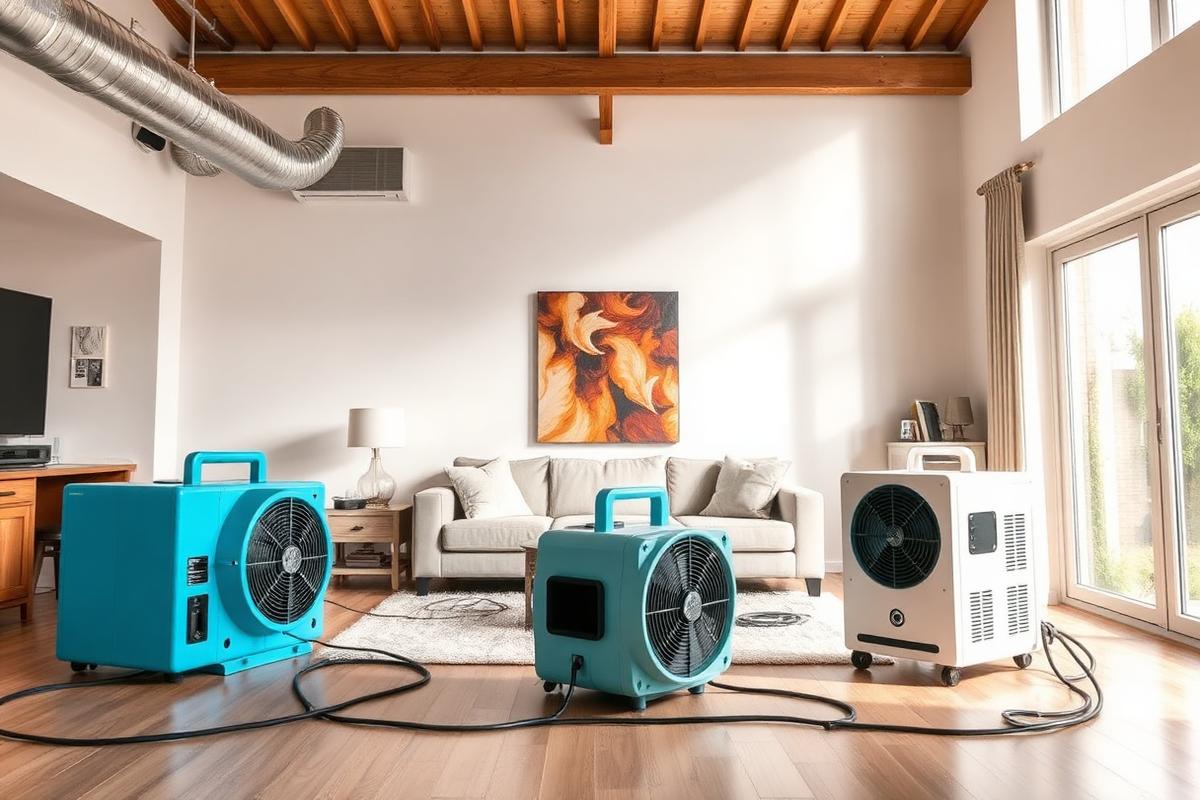
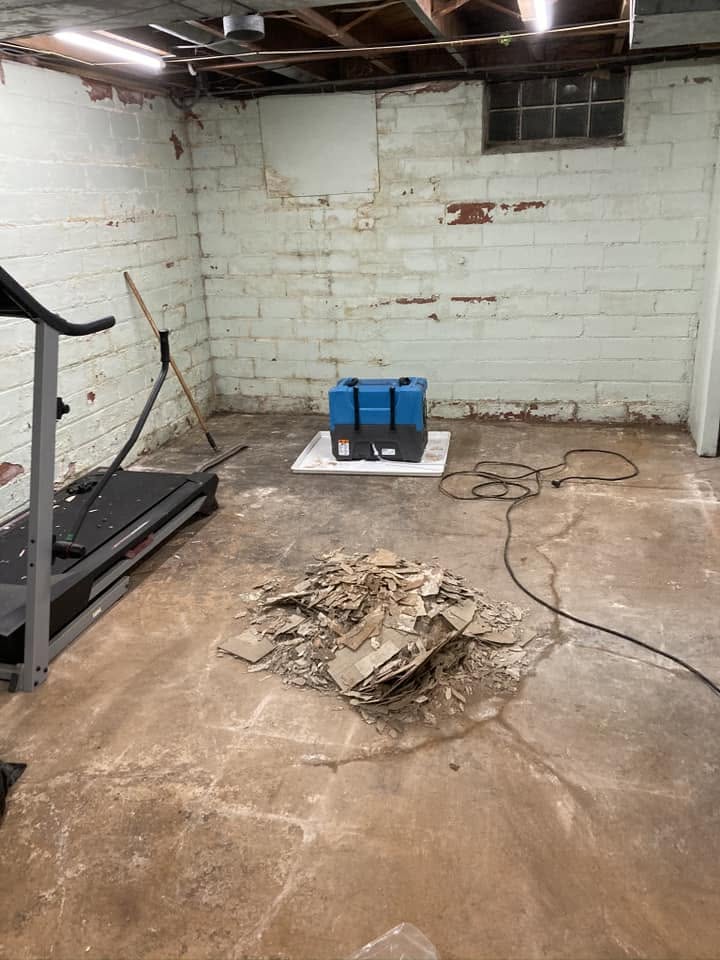
Professional drying is a controlled system: air movers set at specific angles to break the boundary layer of still air sitting against wet surfaces, plus commercial dehumidifiers pulling the moisture out of the air and dumping it to a drain. Technicians take daily moisture readings on the same marked spots to confirm materials are actually trending dry — not just feeling dry. That documentation is also what your insurer wants to see.
Can You Tell From Photos Whether Restoration Is Needed?
Partly. We look at homeowner photos every day, and they're genuinely useful — send them. A good set of photos tells us a lot before we ever pull up.
What photos reliably show:
- How far the water traveled across the floor
- Staining, bubbling, or a tide line on drywall
- Buckled or cupped hardwood, lifted laminate, peeling vinyl seams
- Swollen cabinet bases and separating toe kicks
- Ceiling sag, brown rings, or a bulging paint blister from water above
- Visible surface mold or discoloration
What photos cannot show:
- Moisture content inside drywall, framing, or subfloor
- Water trapped under flooring or inside a wall cavity
- Saturated insulation behind an intact wall
- Whether the source has actually stopped
- How long the material has been wet
That last gap is the important one. We've been sent photos of a floor that looked almost fine and found 90% moisture content in the bottom plate. We've also been sent alarming photos of a dramatic-looking ceiling stain that turned out to be a single dry patch from an old, already-repaired leak.
So use photos to triage, not to decide. If the photos show anything on the first list — or if the space simply smells wrong — get a moisture reading. A proper assessment takes under an hour, uses meters and thermal imaging, and gives you a factual answer instead of a guess.
Practical tip when you're documenting: shoot wide first so the room and the water path are clear, then close-ups of every wet material, then a photo of the source itself. Include something for scale, and don't clean up before you shoot. Those same photos are what your insurance adjuster will want.
What Professional Water Damage Restoration Actually Includes
"Restoration" sounds vague, so here's the actual sequence on a standard residential job.
1. Inspection and scoping
A technician identifies and confirms the source is stopped, classifies the water (Category 1, 2, or 3), and maps how far it spread. This determines everything downstream — clean water gets dried in place, contaminated water gets removed.
2. Moisture detection
Pin and pinless moisture meters read material moisture content; thermal cameras find temperature differentials that reveal water behind surfaces. Dry, unaffected areas of the same material are read first to establish a baseline — that baseline is the target the drying plan has to hit.
3. Water extraction
Standing water comes out with truck-mounted or portable extraction units. Weighted extraction tools press water out of carpet and pad. Every gallon extracted mechanically is a gallon the dehumidifiers don't have to pull out of the air, which is why extraction is where most of the timeline is won or lost.
4. Drying and dehumidification
Air movers and dehumidifiers are placed based on the affected square footage and class of loss. Where water is trapped under flooring or inside a wall cavity, technicians use injection drying mats, cavity vents, or small controlled drill holes at the base of the wall rather than tearing out material. Readings are logged daily until materials hit the dry standard. Most jobs run three to five days.
5. Cleaning and sanitizing
Affected surfaces and salvageable contents are cleaned, and antimicrobial treatment is applied where the category warrants it. Air scrubbers with HEPA filtration run on jobs where microbial growth is present or likely.
6. Repairs and restoration
Finally, whatever was removed gets rebuilt: drywall and texture, baseboard, paint, flooring, cabinetry. On a small clean-water job this can be nothing more than reinstalling baseboard. On a larger loss it's a full reconstruction phase.
Water Damage Restoration in Katy, TX
Katy Water Damage Pros is a local restoration company working across Katy and the surrounding Houston suburbs — Cinco Ranch, Cross Creek Ranch, Firethorne, Elyson, Cane Island, Grand Lakes, Nottingham Country and Old Katy, plus Cypress, Richmond, Sugar Land and Houston.
The problems we see here are pretty consistent. Older Katy neighborhoods have aging cast iron and galvanized plumbing and a steady rate of slab leaks in our shifting clay soil. Newer master-planned communities have supply-line and appliance failures — braided connectors, ice maker lines, washing machine hoses. And everyone deals with storm season, when the issue is water coming in rather than out.
Our practical advice is the same regardless: stop the source, get eyes on it fast, and get a real moisture reading before deciding what the job is. We'd rather tell you it's dry and leave than come back in three weeks for a mold job.
We handle emergency water damage cleanup, water extraction, burst pipe cleanup, flood cleanup, structural drying, and mold prevention and remediation, and we work directly with insurance adjusters on documentation. Assessments are free, and we answer the phone at any hour — water damage doesn't keep business hours.
If you're not sure whether you need us, call and describe it. Half the time we'll tell you how to handle it yourself.
Frequently Asked Questions
Is water damage restoration really necessary?
It's necessary when water has been absorbed into porous materials, has sat for more than a day, is contaminated, or came from a source you can't identify. For a small, clean, immediately-addressed spill on a hard surface, it isn't. The dividing line is hidden moisture, not the size of the puddle.
How long can water sit before causing damage?
Absorption starts within minutes. Materials begin swelling within hours. Microbial growth generally starts between 24 and 72 hours in Katy's humidity. The practical rule: within the first 24 hours most losses stay in the "dry it out" category; past 48 hours, removal and replacement become likely.
Can I dry water damage myself?
For a small clean-water spill on a hard surface, yes — towels, airflow, and your air conditioning are enough. What household fans can't do is remove moisture from the air or reach water inside a wall or under flooring. If water touched drywall, carpet pad, cabinets, or a floating floor, you're past what consumer equipment can dry.
How much does water damage restoration cost?
In the Katy area, small single-room clean-water jobs typically land in the $1,000–$3,000 range. Multi-room losses with flooring removal usually run $3,000–$8,000. Category 3 or whole-floor losses with reconstruction go higher. Most of the variance comes from how much material has to be removed rather than how many days the equipment runs — which is another reason speed matters.
Does insurance cover water damage restoration?
Standard Texas homeowners policies generally cover sudden and accidental discharge — a burst pipe, a failed supply line, a water heater rupture. They generally exclude long-term seepage, gradual leaks, and rising floodwater from outside the home, which needs separate flood insurance. Document everything with photos before cleanup, report promptly, and keep the drying logs; that documentation is usually what determines how smoothly a claim goes.