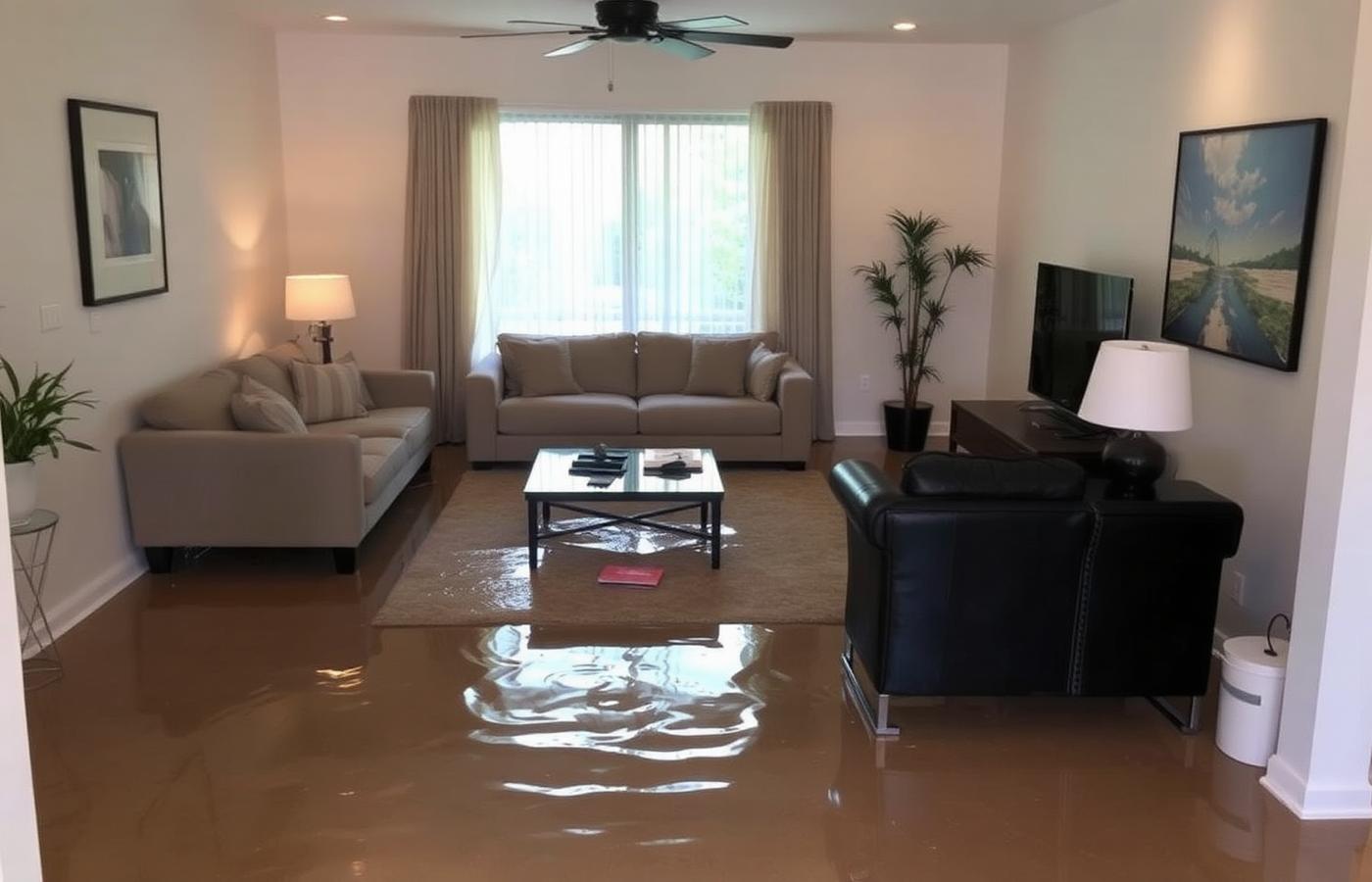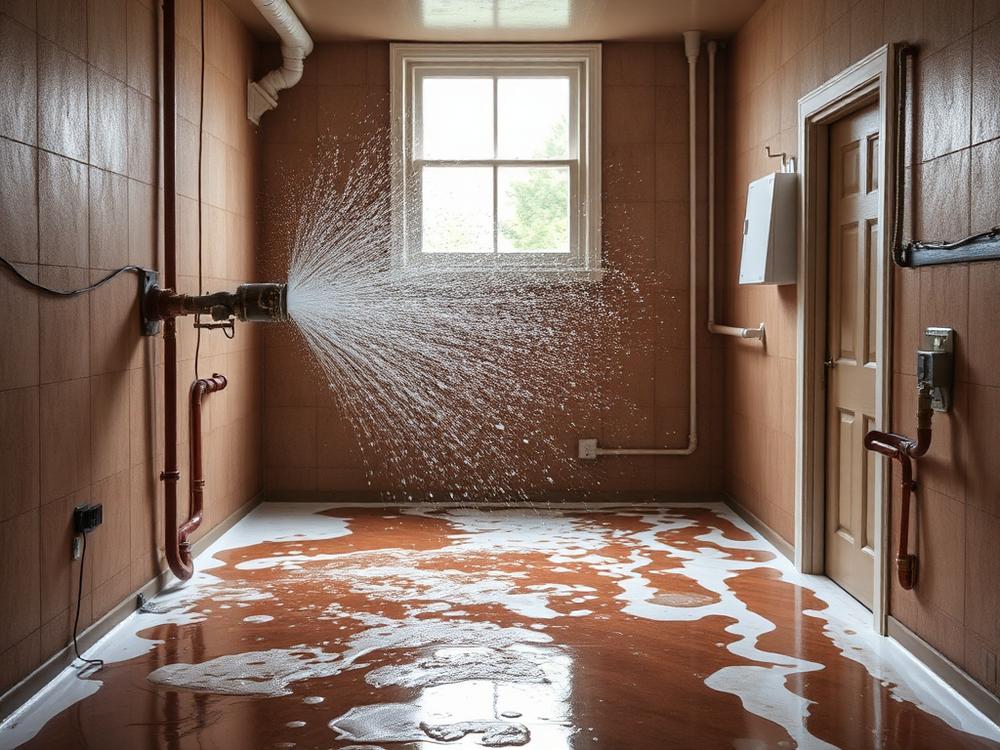
Burst pipes are one of the most common causes of sudden, severe water damage in homes — and one of the least expected. There is no storm warning and no slow drip to notice. A supply line fails, and pressurized water starts filling your home immediately.
Scale surprises most homeowners. A half-inch supply line under normal household pressure can release several hundred gallons per hour. Even a small failure inside a wall can soak flooring, drywall, ceilings, cabinetry, furniture, and personal belongings before anyone notices.
This guide explains what causes burst pipes in Katy, Texas homes, how to recognize the warning signs, exactly what to do in the first minutes, and how professional burst pipe cleanup and water damage restoration work — so you can act quickly and limit both the damage and the cost.
Why Burst Pipes Cause Serious Water Damage
Burst pipes are uniquely destructive compared with most other water sources, for a few reasons.
- The water is pressurized. Unlike a roof leak that drips, a burst supply line sprays, and that volume spreads across floors and into adjacent rooms within minutes.
- It usually starts out of sight. Most pipe failures happen inside wall cavities, in attics, or under slabs — so water saturates framing and insulation before it appears on a surface.
- Water travels. It runs along the top plate of walls, wicks up drywall, migrates under laminate and hardwood, and follows framing into rooms far from the break.
- Hidden moisture leads to mold. Wet insulation and wall cavities stay damp long after the visible surface dries, and mold can begin developing in 24 to 48 hours.
- Damage compounds hourly. Materials that could have been dried in place on day one often require removal and replacement by day three.
This is why fast action matters so much. Prompt water damage repair — shutting off the source, extracting water, and starting controlled drying — routinely turns what would have been a demolition-and-rebuild project into a straightforward drying job. The difference is frequently thousands of dollars.
Common Causes of Burst Pipes in Katy Homes
Freezing Temperatures
Katy does not freeze often, and that is precisely the problem. Homes here are built for heat, not cold, so pipes in attics, garages, exterior walls, and uninsulated crawl spaces are frequently exposed.
When water inside a pipe freezes, it expands and creates enormous pressure between the ice blockage and the closed faucet. That pressure — not the ice itself — splits the pipe. Often the break is not discovered until the line thaws and water begins flowing again, sometimes a day later.
Aging or Corroded Pipes
Plumbing has a service life. Older galvanized steel corrodes from the inside out, older copper develops pinholes, and certain generations of plastic supply fittings become brittle with age. Many established Katy neighborhoods now have plumbing well into its third or fourth decade, and material fatigue shows up as sudden failures at joints and elbows.
High Water Pressure
Household plumbing is designed for roughly 40 to 60 psi. Municipal pressure can run higher, and without a functioning pressure-reducing valve that excess stresses every connection, appliance hose, and fixture in the home continuously. Chronically high pressure shortens the life of the entire system and makes an eventual failure much more likely.
Poor Installation or Maintenance
Improperly supported pipe runs, over-tightened or under-tightened connections, mixed incompatible metals, and unpermitted DIY repairs all create weak points. Small ongoing issues — a fitting that seeps, a valve that drips — are early warnings. Left unaddressed, they progress to full failures.
Tree Roots and Underground Pipe Damage
Katy's expansive clay soil shifts significantly between wet and dry seasons, stressing buried lines and slab plumbing. Add mature tree roots seeking moisture around joints, and exterior water and sewer lines can crack or separate. Underground failures often reveal themselves as unexplained wet spots in the yard, foundation moisture, or a water bill that jumps for no clear reason.
Signs You May Have a Burst Pipe
Not every pipe failure announces itself with water pouring across the floor. Watch for these indicators:
- A sudden drop in water pressure at faucets or showers
- Unusual sounds from your plumbing — banging, whistling, hissing, or running water when nothing is on
- Water stains, discoloration, or bubbling paint on walls and ceilings
- Unexplained puddles, damp carpet, or warm spots on the floor (a possible slab leak)
- Damp or musty odors, especially in closets, near baseboards, or in one specific room
- A water bill that increases with no change in household usage
- Visible cracks, corrosion, mineral buildup, or active dripping at exposed pipes
- A water meter that continues moving when every fixture in the home is off
Early detection genuinely prevents major damage. A pinhole leak caught in week one is a plumbing repair. The same leak found in month three is a restoration project involving drywall, flooring, and often mold remediation.
What To Do Immediately After a Pipe Bursts
If a pipe has burst right now, work through this checklist in order.
1. Shut Off the Water Supply
This is the single most important action, and every minute counts. If the failure is at a fixture or appliance, close its local shutoff valve. If the source is unclear or inside a wall, shut off the main. In most Katy homes the main shutoff is near the front hose bib, in the garage, or in the meter box at the curb (which may need a meter key). After shutting off, open the lowest faucets in the house to drain remaining pressurized water from the lines.
2. Turn Off Electricity if Water Reaches Electrical Areas
If water has reached outlets, extension cords, appliances, or is running down through a ceiling near light fixtures, cut power to the affected area at the breaker panel — but only if you can reach the panel while standing on a dry surface. Never enter standing water to reach a breaker, and never plug in fans or vacuums while standing in water. If you have any doubt, wait outside and let the professionals handle it.
3. Remove Valuables From the Affected Area
Move electronics, rugs, documents, and furniture out of the wet area and out of adjacent rooms water is heading toward. For furniture too heavy to move, place aluminum foil or wood blocks under the legs to prevent staining and further absorption. Lift draperies and curtains off wet flooring.
4. Document the Damage
Before you clean, move, or discard anything, build your record:
- Photograph and video every affected room — wide shots plus close-ups
- Capture the failed pipe or fitting itself if it is visible and safe to photograph
- Document the waterline on walls, cabinets, and baseboards
- Photograph damaged contents individually, noting age and approximate value
- Keep every receipt for emergency expenses, mitigation services, and temporary lodging
- Do not throw damaged items away before they are documented and, ideally, seen by your adjuster
5. Contact a Water Damage Restoration Company
A plumber repairs the pipe. A restoration company dries the house — two different jobs, and you usually need both. Emergency water damage restoration crews arrive with truck-mounted extraction equipment, commercial dehumidifiers, and moisture detection tools that map exactly how far water has traveled inside your walls and floors. Because mitigation value drops by the hour, emergency restoration services run 24/7.
Notify your insurance carrier the same day. Most policies require prompt notice and reasonable mitigation — meaning you are expected to start limiting damage, not wait for an adjuster before drying begins.
The Burst Pipe Cleanup Process
Inspection and Damage Assessment
Professional cleanup starts with mapping the real extent of the damage, not the visible extent. Technicians use moisture meters and thermal imaging cameras to identify:
- Every affected room and material, including areas that appear untouched
- Actual moisture content in drywall, subfloor, framing, and insulation
- Hidden water inside wall cavities, under cabinets, and beneath flooring
- Water category — burst supply lines are typically clean Category 1 water, though it degrades if left standing
- Which materials can be dried in place and which must be removed
That assessment defines the drying plan and produces the documentation your insurance claim depends on.
Water Extraction
Bulk water comes out first, because drying cannot progress while standing water remains. Professional water extraction uses truck-mounted and portable extractors, submersible pumps for deep water, and weighted extraction tools that press water out of carpet and padding rather than skimming the surface. Saturated carpet pad, which holds water almost indefinitely, is typically removed at this stage.
Drying and Dehumidification
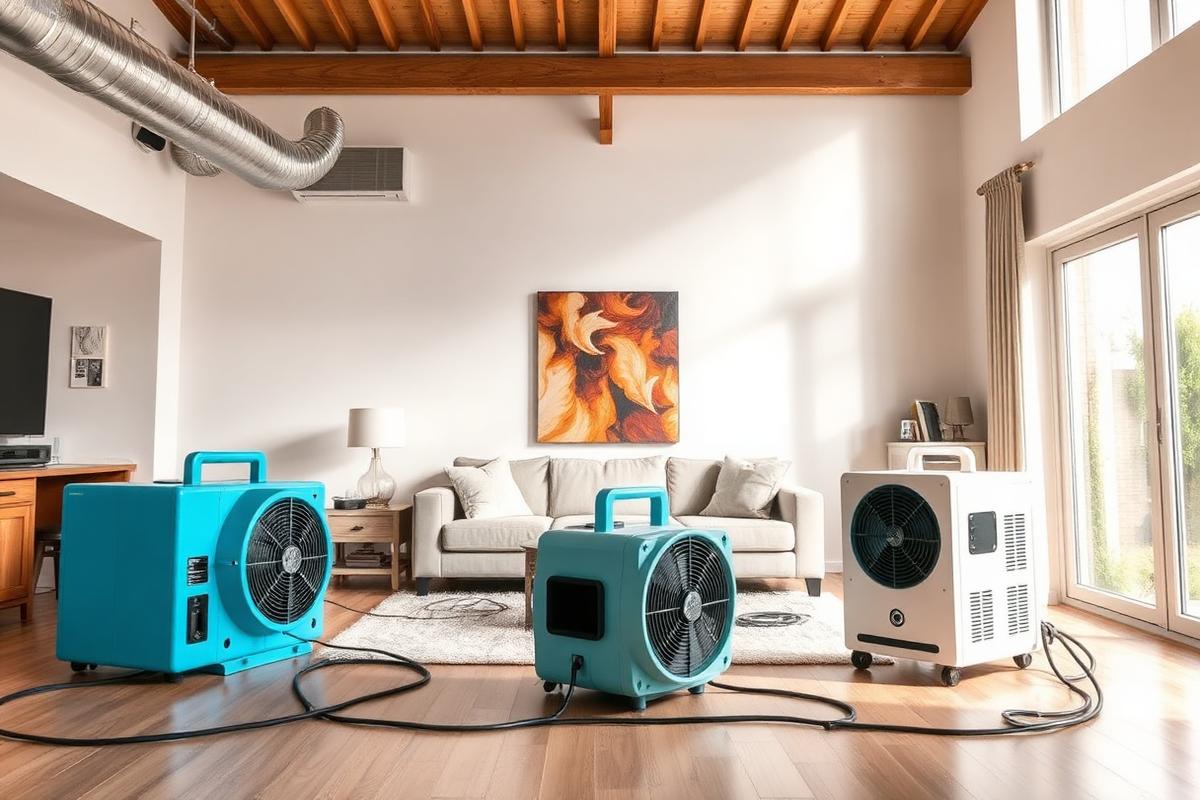
Extraction removes what you can see. Structural drying removes what you cannot — moisture absorbed into framing, subfloor, and drywall. A proper drying setup balances:
- Air movers positioned by room geometry to sweep moisture off surfaces into the air
- Commercial LGR dehumidifiers sized to the space to pull that moisture back out (in Katy's humidity, opening windows usually slows drying rather than helping)
- Controlled temperature, since warmer air evaporates and carries moisture more efficiently
- Daily moisture monitoring, comparing readings against dry standards elsewhere in the home
- Targeted access — small drilled holes or removed baseboards to dry inside wall cavities without full demolition
Most residential structural drying takes three to five days. Hardwood, plaster, and dense materials take longer. A job is only finished when meter readings confirm materials are genuinely dry — not when surfaces feel dry to the touch.
Cleaning and Restoration
Once the structure is dry, the final phase restores the home:
- Cleaning and antimicrobial treatment of affected surfaces and cavities
- Deodorization to remove any lingering musty odor
- Removal and replacement of unsalvageable drywall, insulation, baseboards, and flooring
- Repairs: drywall finishing, texture matching, paint, trim, flooring, and cabinetry
- A final walkthrough with documented moisture readings for your records and your insurer
Can a Burst Pipe Cause Mold?
Yes — and it is the most common long-term consequence of an incompletely dried pipe burst.
Mold spores are already present in every home. They only become a problem when they find moisture and an organic food source, and wet drywall, wood framing, insulation, and carpet backing supply both. In Katy's humid climate, mold can begin colonizing within 24 to 48 hours, with visible growth often appearing in three to five days.
Burst pipes are especially risky because the water starts inside the structure. Wall cavities and insulation stay wet long after the room looks and feels normal, which is exactly where post-repair mold problems begin.
Effective mold prevention is simply thorough restoration done fast: extract within hours, dry completely with verification by moisture meter, remove materials that cannot be dried, and apply antimicrobial treatment. When growth has already started — musty odor, visible spotting, stains that keep returning — the correct response is professional mold remediation with containment and air filtration, because disturbing an established colony spreads spores throughout the home.
Does Home Insurance Cover Burst Pipe Damage?
In general terms, most standard homeowners policies treat sudden and accidental water discharge — which is what a burst pipe is — as a covered peril. Coverage typically applies to the resulting damage to your home and belongings.
Some important distinctions commonly apply:
- Sudden and accidental failures are usually covered; gradual leaks that went unaddressed over weeks or months often are not.
- Damage attributed to poor maintenance, deferred repairs, or a known ongoing problem may be excluded.
- The cost of repairing the pipe itself is frequently treated differently from the resulting water damage.
- Mold coverage is often limited or capped, and sometimes tied to whether the water event itself was covered.
- Freeze-related claims may require that reasonable steps were taken to maintain heat in the home.
This is general information, not legal or insurance advice — every policy differs. What always helps your position is thorough documentation: photos and video before cleanup, receipts for emergency expenses, and a professional restoration company's moisture logs and scope reports. Read your policy's water damage section and call your carrier promptly.
How Much Does Burst Pipe Cleanup Cost?
There is no flat rate, because no two pipe bursts affect the same amount of material. Cost is driven by:
- How much water was released and how long it ran before shutoff
- How many rooms and floors were affected
- Flooring type — carpet, laminate, tile, and hardwood dry and salvage very differently
- How much drywall, insulation, and cabinetry absorbed water
- Drying requirements: how many air movers and dehumidifiers, and for how many days
- Repairs needed after drying — drywall, texture, paint, trim, flooring, cabinetry
- Whether mold developed and remediation is required
- Whether the water was clean or had degraded from sitting
As broad context for the Katy area, mitigation-only jobs (extraction plus structural drying) commonly fall in the low thousands, while full restoration including repairs on a significant multi-room event can run well into the tens of thousands. Any figure quoted without an on-site inspection is a guess — moisture mapping is what determines real scope. We provide a documented assessment before work begins, and we can bill your insurance carrier directly on covered claims.
How to Prevent Burst Pipes in Your Katy Home
- Insulate exposed pipes in the attic, garage, exterior walls, and along the outside of the house — inexpensive foam sleeves prevent most freeze failures.
- Know where your main shutoff valve is, and make sure everyone in the household knows too. Test it occasionally so it is not seized when you need it.
- Check your water pressure with a hose-bib gauge. Above about 60 psi, have a pressure-reducing valve installed or serviced.
- Inspect visible plumbing seasonally for corrosion, mineral crust, dampness, or staining at joints.
- Replace rubber washing machine hoses with braided stainless steel, and inspect dishwasher, ice maker, and water heater connections annually.
- During a Texas freeze: drip faucets on exterior walls, open cabinet doors under sinks, disconnect and drain garden hoses, and keep the heat on even when away.
- Address small plumbing problems immediately — a slow drip today is a failed fitting later.
- Consider an automatic water shutoff device that closes the main when it detects abnormal flow, especially if you travel.
- Monitor your water bill; an unexplained increase is often the first sign of a hidden leak.
When Should You Call a Professional for Burst Pipe Cleanup?
A tiny drip caught within minutes and dried with towels is a homeowner job. Beyond that, professional equipment changes the outcome. Call a restoration company if you have:
- Large amounts of standing water anywhere in the home
- One or more flooded rooms
- Water inside walls, behind cabinets, or under flooring
- Ceiling damage, sagging, or water traveling between floors
- A slab leak or water coming up through the floor
- Any musty odor, visible mold, or moisture present more than 24 hours
- Contaminated water, or clean water that has been standing long enough to degrade
- An insurance claim that needs to be documented correctly from the start
When homeowners search for water damage restoration near me after a pipe burst, what they actually need is a local crew that answers immediately, arrives with extraction and drying equipment already on the truck, and begins mitigating the same day — not a national call center booking an inspection for later in the week.
Frequently Asked Questions About Burst Pipe Damage
What should I do first if a pipe bursts?
Shut off the water supply immediately — the fixture's local valve if you can identify the source, otherwise the main shutoff. Then open low faucets to drain the lines, cut power to the affected area at the breaker if water has reached outlets or appliances, move valuables out, photograph everything, and call a water damage restoration company. You will typically need both a plumber to repair the pipe and a restoration crew to dry the structure.
How long does burst pipe cleanup take?
Water extraction usually takes a few hours. Structural drying typically runs three to five days, longer for hardwood, plaster, or multi-room events. If drywall, flooring, or cabinetry repairs are required, full restoration commonly takes two to six weeks depending on the scope of work and insurance approval timelines.
Can a burst pipe cause mold?
Yes. Because burst pipes usually release water inside walls and under floors, moisture frequently remains in cavities and insulation after the visible area dries. In Katy's humid climate, mold can begin developing within 24 to 48 hours. Complete structural drying verified with moisture meters, plus antimicrobial treatment, is what prevents it.
Can I clean up burst pipe water myself?
A small, quickly contained leak on a hard surface can often be handled with towels, a shop vacuum, and household fans. Significant water — saturated carpet or drywall, multiple rooms, water inside walls, or anything standing for more than a few hours — requires professional extraction, commercial dehumidification, and moisture verification that consumer equipment cannot provide. Incomplete drying is the leading cause of mold and repeat repairs.
Burst Pipe? Call Katy Water Damage Pros — 24/7
A burst pipe does not wait for business hours, and neither do we. Katy Water Damage Pros provides 24/7 emergency water damage restoration throughout Katy, Texas and the surrounding Houston area — including emergency burst pipe cleanup, water extraction, complete structural drying, mold prevention, and full repairs.
Our local crews arrive with commercial extraction and drying equipment, map hidden moisture with meters and thermal imaging, document every reading for your insurance claim, and do not call a job finished until your home is verified dry.
If a pipe has burst, shut off your water and call us now — or reach out through our contact page and a Katy crew will be on the way.