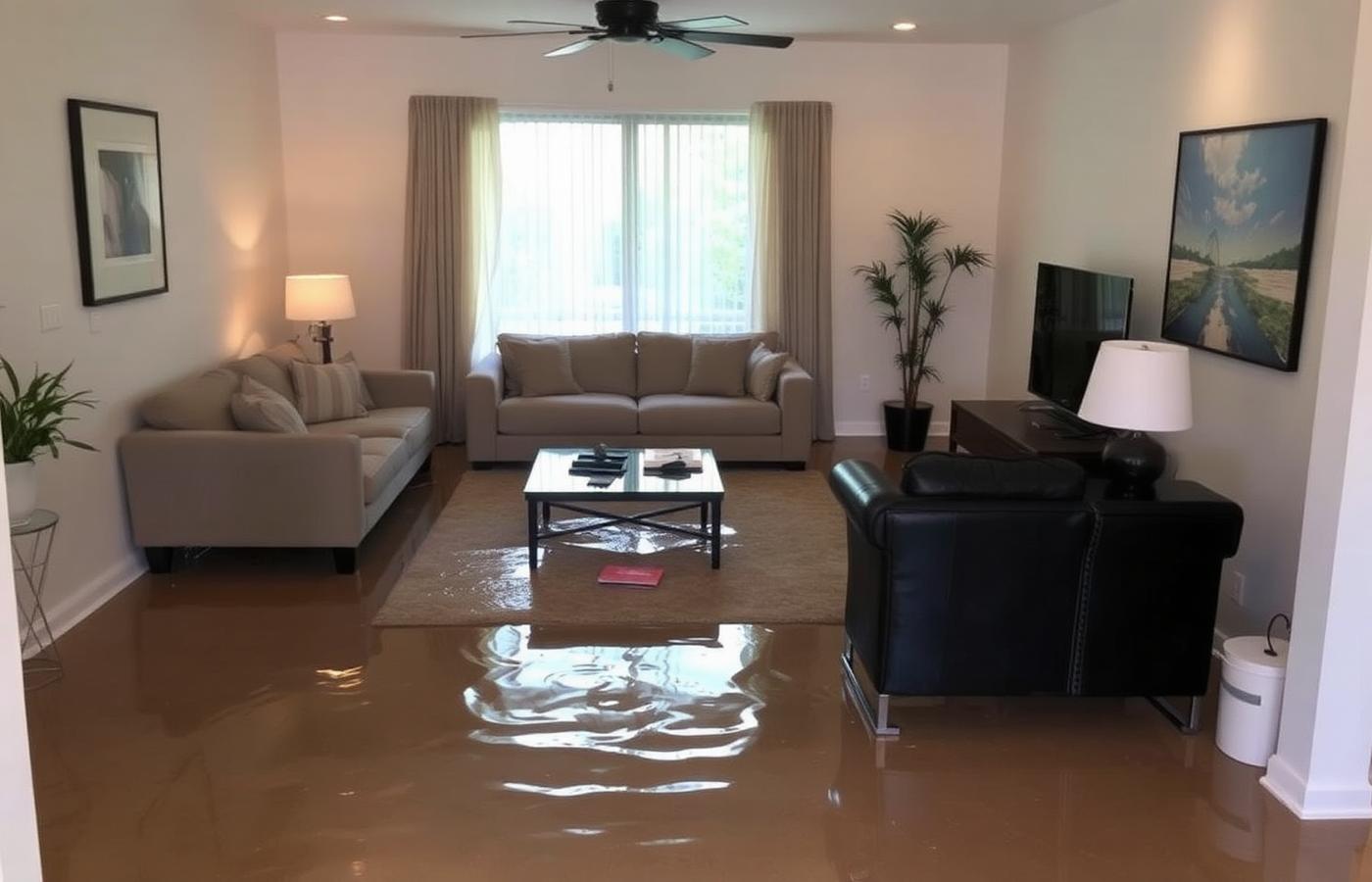
If you're reading this with water on your floor, take a breath — and act fast. In Katy, TX, the first few hours after a flood decide whether you're facing a small drying bill or a full property restoration. Between our summer thunderstorms rolling off the Gulf, tropical systems pushing rain up Buffalo Bayou and Cypress Creek, and the flat, clay-heavy ground under neighborhoods like Cinco Ranch, Cross Creek Ranch, Cane Island, Grand Lakes and Old Katy, water has nowhere to go once it's inside your home. It sinks into subfloor, wicks up drywall, and starts feeding mold spores within 24 hours.
As a local Katy water damage restoration team, we respond to flooded homes across Katy and West Houston every week. The homeowners who protect the most of their property all do the same seven things in the same order. This is that checklist — written specifically for Katy residents dealing with storm flooding, burst pipes, or backed-up drains right now.
Need help this minute? Call our 24/7 Katy flood cleanup line and keep reading while a crew is dispatched.
1. Turn Off Water and Electricity if Safe
Before you step into any standing water, kill the electricity. Flooded outlets, submerged appliances, and wet extension cords are the most common cause of injury during Katy flood cleanup. If your breaker panel is in a dry area (usually the garage or a utility closet), flip the main breaker off. If the panel itself is wet or you'd have to wade through water to reach it, stop and call an electrician or your utility.
Next, stop more water from coming in. For a burst pipe, appliance leak, or supply-line failure, shut off the main water valve — most Katy homes built after 2000 have it near the front hose bib or in the garage; older Old Katy homes often have it at the meter near the curb (you'll need a meter key). For rising outdoor flood water from storms, don't try to seal doors with towels alone; move valuables up and focus on the next steps.
- Never touch a breaker while standing in water.
- Unplug electronics only if the area around the outlet is fully dry.
- If you smell gas, leave immediately and call CenterPoint Energy.
2. Document Damage for Insurance
Before you move a single piece of furniture or throw anything away, walk every affected room with your phone and record video. Narrate what you see — the source of the water, how high it reached on the walls, which rooms are affected, and any damaged belongings. Then take still photos of individual items, serial numbers on appliances, and waterlines on baseboards. This 10-minute step is the single biggest factor in how much of your claim gets paid.
Texas homeowners policies typically cover sudden and accidental water damage (burst pipes, appliance failures, storm-driven rain through a wind-damaged roof) but exclude rising flood water from outside the home — that requires separate NFIP flood insurance, which many Katy homes near the reservoirs and bayous carry. Either way, insurers reward documentation.
- Video walkthrough of every affected room before cleanup.
- Close-up photos of damaged items with serial numbers visible.
- Photos of the water source (burst pipe, ceiling, exterior door, etc.).
- Keep every receipt — extraction, hotel, replacement supplies, meals out.
- Open the claim within 24–48 hours by phone, not just app.
3. Remove Standing Water Quickly
Every hour standing water sits, more of it soaks into subfloor, insulation, and lower drywall. For small amounts (under an inch, small area), a wet/dry shop vac works — empty it outside, not into a sink that drains through affected pipes. For anything larger, or for flooding from storms, sewage, or an unknown source, this is where professional emergency water removal in Katy, TX makes the biggest difference. Truck-mounted extractors pull hundreds of gallons per hour, and portable extractors can reach upstairs bathrooms and second-story bedrooms our crews respond to constantly in Cinco Ranch and Firethorne.
Do not use a household vacuum, and do not walk repeatedly across saturated carpet — it pushes water deeper into the pad and subfloor, turning a drying job into a demolition job.
4. Prevent Mold Growth
In Katy's humidity, mold spores start colonizing wet drywall, baseboards, and cabinetry within 24 to 48 hours. Once you've extracted standing water, the goal shifts to drying materials as fast as possible. Open windows only if the outdoor humidity is below about 55% — during and right after a Gulf Coast storm, opening windows actually makes things worse because you're pulling in saturated air.
- Pull up wet area rugs and take them outside — they trap moisture against the floor.
- Lift carpet away from tack strips at the edges of rooms to expose the pad.
- Run your AC on a low temperature (68–70°F) to help dehumidify.
- Move furniture off wet carpet and place foil under legs to prevent staining.
- Do not use bleach on drywall — it doesn't kill mold inside the material.
If it has already been more than 48 hours, or if you see any discoloration or smell a musty odor, treat it as a mold situation and call for professional mold remediation before continuing.
5. Protect Furniture and Belongings
Once the immediate water source is controlled, focus on saving what you can. Wood furniture warps quickly when it sits on wet flooring, and upholstered pieces wick water up through their legs into cushions and frames. Move everything you can lift to a dry, elevated area — the garage, a covered patio, or an unaffected upstairs room.
- Move electronics, photos, and important documents first.
- Elevate remaining furniture on blocks, bricks, or aluminum foil.
- Remove wet books and papers and lay them flat to air dry — do not stack.
- Wipe down solid wood pieces with a dry towel to slow warping.
- Bag soft items (bedding, clothes, plush toys) and take them to a laundromat with commercial dryers if your washer is affected.
Anything porous that has been sitting in contaminated water for more than 24 hours — mattresses, upholstered furniture, laminate flooring, particleboard — is usually a loss. Document it, but don't try to save it at the cost of the rest of the room.
6. Know When to Call a Professional
Some flood situations really are DIY. A slow toilet supply-line drip caught within an hour, a small under-sink leak on a tile floor — those are shop-vac and fan jobs. But most Katy floods aren't those jobs. Call a professional Katy flood cleanup team immediately if any of these apply:
- Standing water covers more than one room or reaches above the baseboards.
- Water came from outside (storm, bayou, street flooding) — always considered contaminated.
- Water came from a toilet, sewer line, or dishwasher drain — Category 2 or 3 water.
- Water sat for more than 24 hours before you discovered it.
- Ceilings are sagging or drywall is bubbling upstairs.
- You smell anything musty, sour, or sewage-like.
- The affected area includes hardwood, engineered wood, or laminate flooring.
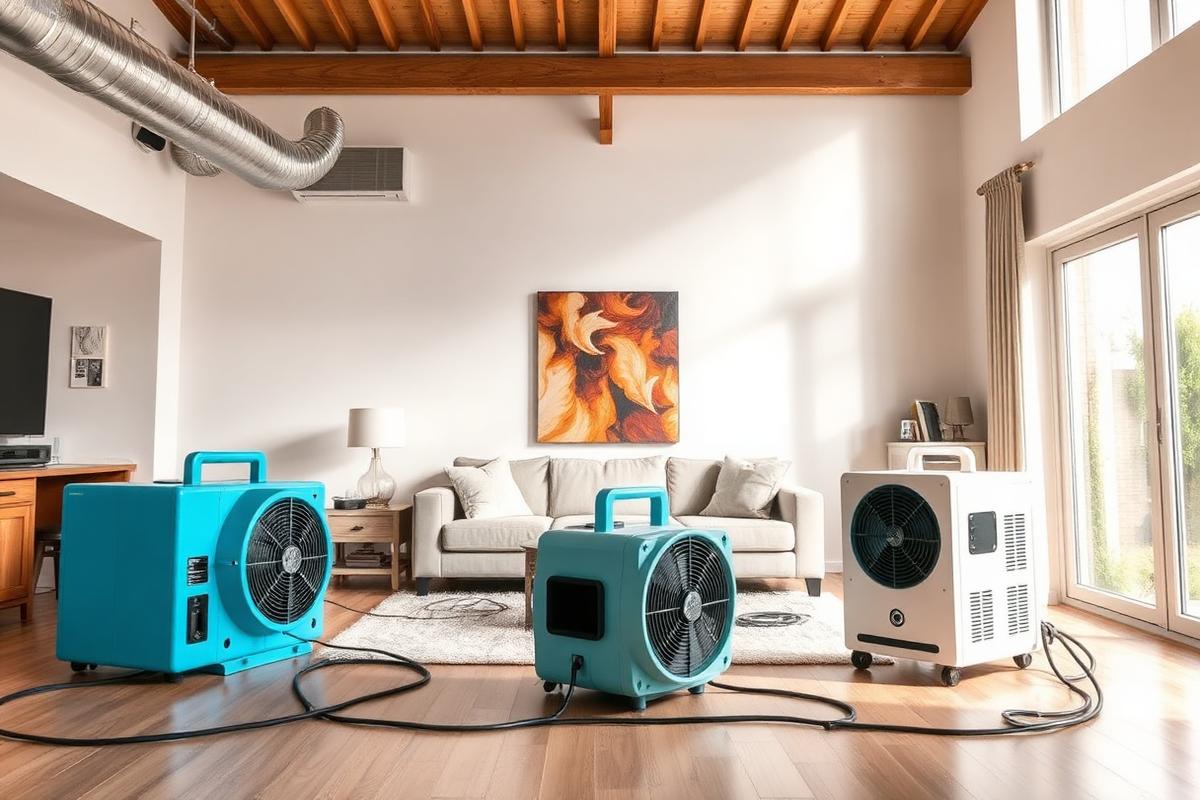
The reason isn't just experience — it's equipment. Household box fans and a dehumidifier from Home Depot cannot dry the water trapped inside wall cavities and under subflooring. Professional restoration crews use commercial air movers, low-grain refrigerant (LGR) dehumidifiers, and moisture meters to verify materials are dried back to their pre-loss moisture content. That verification is also what insurance adjusters look for before approving repairs.
7. How Katy Restoration Experts Help
When you call our team for water damage restoration in Katy, TX, here's what happens — usually within 45 to 60 minutes of your call, any time of day or night.
- Dispatch and arrival: A local Katy crew is dispatched immediately with a fully stocked truck.
- Assessment: We use thermal imaging and moisture meters to map every affected area, including behind walls and under floors.
- Water extraction: Truck-mounted or portable extractors remove standing water and pull moisture from carpet and pad.
- Controlled demolition: Only unsalvageable materials are removed — we save what can be saved.
- Structural drying: Air movers and LGR dehumidifiers dry framing, subfloor, and wall cavities to verified pre-loss levels.
- Antimicrobial treatment: Applied to any surface that contacted contaminated water to prevent mold.
- Insurance documentation: We deliver Xactimate-compatible scopes, moisture logs, and photo documentation directly to your adjuster.
- Restoration: Drywall, texture, paint, flooring, and cabinetry rebuilt so the home looks like the flood never happened.
We're a Katy-based crew serving Katy, Cypress, Fulshear, Richmond, Sugar Land, West Houston, and the greater Houston area — which means when you call, you get a team that already knows your neighborhood, your typical build type, and your local insurance adjusters.
The homeowners who call within the first hour of a Katy flood almost always keep their flooring, their cabinets, and most of their drywall. The ones who wait until Monday morning usually don't. Time is the single biggest variable in flood damage repair in Katy.
Frequently Asked Questions
How much does Katy flood cleanup cost?
Most residential emergency water removal jobs in Katy, TX run between $2,500 and $7,500 for extraction and structural drying only. Full water damage restoration including drywall, flooring, and paint typically ranges from $8,000 to $30,000+ depending on affected square footage. Nearly all of it is covered under a standard Texas homeowners policy when the water source is sudden and accidental.
Is Katy flood damage covered by homeowners insurance?
Sudden, accidental water damage — burst pipes, appliance failures, storm-driven rain through a wind-damaged roof — is typically covered. Rising flood water from bayous, creeks, or street flooding requires separate NFIP flood insurance, which many homes in flood-prone parts of Katy already carry. We work with every major Texas carrier and document claims to the standard adjusters expect.
How long does water damage restoration in Katy TX take?
Structural drying alone typically takes 3 to 5 days. Full flood damage repair in Katy — drying plus rebuild — usually runs 10 to 21 days for a single-room event and 3 to 6 weeks for whole-home flooding. Our team runs monitoring daily so drying wraps as soon as materials hit pre-loss moisture levels.
Should I turn on my AC after a flood?
Yes — as long as the HVAC system itself wasn't submerged. Running the AC at 68–70°F helps pull humidity out of the air and slows mold growth. If flood water reached your air handler, condenser, or return ducts, shut the system off and have it inspected before running it again.
Do I need mold testing after a flood?
If the flooded area was dried within 24–48 hours by a professional restoration crew using proper equipment, mold testing usually isn't necessary. If materials sat wet longer than that, or if you smell anything musty during or after drying, get an independent air quality test and consider professional mold remediation.
Which Katy neighborhoods flood the most?
Homes near Barker and Addicks reservoirs, along Mason Creek, and in older sections of Old Katy see the most recurring storm flooding. Newer developments like Cinco Ranch, Cross Creek Ranch, and Cane Island more often deal with interior flooding from failed supply lines, water heaters, and second-story bathrooms — which we respond to every week.
Get Emergency Water Damage Help in Katy, TX
If your home is flooding right now, the most valuable thing you can do is get a professional Katy water damage restoration crew on-site fast. We answer the phone 24/7, dispatch immediately, and bill directly to your insurance in most cases — so you can focus on your family and belongings while we handle the water.
Call now for emergency water removal in Katy, TX, or request help through our contact page and we'll be on the way.